

close
Choose Your Site
Global
Social Media
Views: 0 Author: Site Editor Publish Time: 2026-10-20 Origin: Site


Global demand for fresh blueberries is booming. Commercial growers must rethink their cultivation strategies to stay profitable. To keep pace, many are rapidly transitioning from traditional field planting to high-density, automated container production. Integrating advanced technologies like drip irrigation and mechanical harvesters undeniably saves time and labor. However, the foundation of this success relies on a frequently overlooked detail. That detail is the structural geometry of your nursery containers.
Selecting the wrong receptacle triggers a cascade of operational failures. You risk wasting greenhouse real estate, compromising root health, and running highly inefficient watering cycles. Fortunately, agronomic engineering offers a clear solution. Upgrading to a high-quality Square Blueberry Pot is the superior choice for maximizing yield. It optimizes expensive floor space and ensures the long-term vitality of your crops.
Space Optimization: Geometric containers allow for high-density planting. This maximizes yield per square foot in automated greenhouse or outdoor nursery setups.
Healthier Root Systems: The 90-degree corners naturally guide roots downward. This prevents the harmful root circling commonly seen in traditional round pots.
Irrigation Efficiency: Straight edges align perfectly with automated drip irrigation lines. This significantly reduces water waste while ensuring highly uniform nutrient distribution.
Durability Matters: Heavy-duty injection-molded plastics offer structural longevity. They easily withstand the rigors of commercial, long-term berry production.
Over the past decade, the commercial berry industry has experienced a massive paradigm shift. Traditional in-ground farming is rapidly being replaced by high-density, container-grown automated production. This transition is not merely a passing horticultural trend. It is a calculated agricultural strategy designed to mitigate environmental risks and maximize financial returns.
Recent agronomic data reveals a sharp pivot in commercial berry cultivation. Driven by erratic climate patterns, an increase in soil-borne pathogens, and severe labor shortages, the industry is moving aggressively toward controlled-environment, substrate-based systems. This is a survival strategy for modern farms. In these high-density setups, every cubic inch of greenhouse space is monetized. Consequently, the physical geometry of the growing vessel has evolved from a mere afterthought into a critical component of precision agriculture. Industry consensus indicates that automated container production is the most viable path forward. It allows growers to scale operations predictably while reducing their dependency on manual labor and arable land.
Blueberries are notoriously sensitive calcifuges. They demand a highly specific, acidic soil environment with a pH ranging strictly between 4.5 and 5.5 to thrive. In traditional ground farming, amending native soil to reach and maintain these exact levels is an expensive and inconsistent battle. Conversely, container growing allows commercial farmers to engineer the perfect custom substrate mix. This is typically a precise, aerated blend of pine bark, peat moss, and horticultural perlite. This meticulous control ensures every single bush operates in an optimized, perfectly balanced root environment.
Modern agriculture relies heavily on systemic efficiency. Growing berry bushes in uniform containers paves the way for precise, automated fertigation. This involves the simultaneous injection of fertilizers into an irrigation network. By utilizing advanced sensors to monitor the electrical conductivity and moisture levels of the substrate, automated systems deliver the exact volume of water and nutrients required directly to the root zone. This eliminates guesswork and minimizes resource waste.
Beyond nutrient management, uniform containers provide a level of spatial mobility that is simply impossible in ground farming. Picture a bustling commercial nursery. Managers can seamlessly space out plants as their canopies expand. They can instantly quarantine diseased bushes or relocate stock based on seasonal temperature shifts. Furthermore, standardized container dimensions are highly compatible with modern over-the-row mechanical harvesting equipment. This streamlines the labor-heavy picking process and protects the integrity of the fruit.
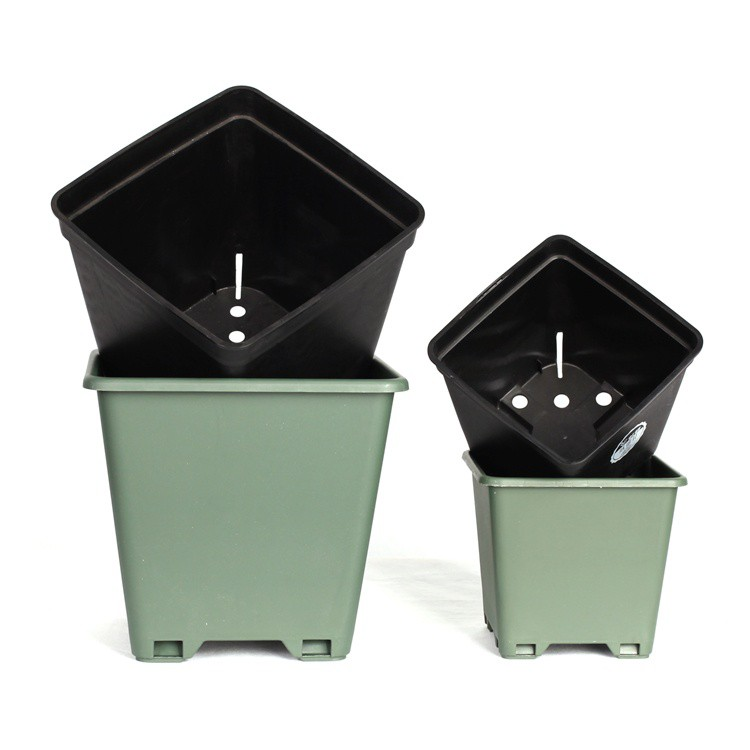
Round nursery containers have historically served as the default choice for growers. However, the rigorous demands of modern, high-density automated agriculture are exposing their underlying structural flaws. A fierce debate between round and square containers has emerged on the front lines of commercial farming. Agronomic science now heavily favors geometric designs for long-term perennial crops.
Round pots were originally designed for manufacturing convenience. They were never engineered to support optimal plant biology or spatial efficiency.
Wasted Spatial Footprint: Place curved pots side-by-side in a nursery layout. Their shape naturally creates empty, unusable voids between the containers. In a large-scale commercial operation, this dead space translates directly to thousands of lost plants and lost revenue per acre.
The Root Circling Epidemic: From a biological standpoint, round vessels are detrimental to long-term woody perennials. When an expanding root tip hits the smooth, curved inner wall, it follows that curve to create an endless spiral. Over time, these roots become thick and choked. They eventually strangle the plant—a fatal condition known as root girdling—and severely stunt fruit production.
Instability: Round pots possess a smaller base relative to their overall volume, making them inherently top-heavy. In high-wind outdoor environments or during automated transport on conveyor belts, they are significantly more prone to tipping over. This risks catastrophic plant damage and substrate loss.
Forward-thinking growers are rethinking their hardware to combat these inefficiencies.
The Flush Grid System: Geometric containers fit flush against one another. This seemingly simple feature creates a highly stable, space-efficient grid system. It capitalizes on every available square inch of expensive greenhouse flooring.
Architectural Root Training: The internal design of a square receptacle fundamentally alters root behavior. When a root grows outward and hits a flat wall, it travels laterally until it reaches a sharp 90-degree corner. This corner physically breaks the apical dominance of the root. It forces the root to grow vertically downward toward the drainage holes. The result is a deeper, healthier, and vastly more fibrous root mass capable of explosive growth.
For commercial operations acutely focused on return on investment, the physical shape of a container directly dictates operational fluidity. Here are the objective, data-driven reasons why geometric containers dominate automated agricultural setups.
In the commercial farming sector, space equates directly to revenue. Geometric containers eliminate the interstitial gaps found between curved pots. Consequently, growers achieve significantly higher planting densities without compromising plant health. By upgrading to a durable square blueberry pot, operators frequently see a direct increase in overall berry yield per acre. They are simply reclaiming previously wasted footprint.
Feature | Round Containers | Square Containers | Impact on Commercial Production |
|---|---|---|---|
Footprint Efficiency | Leaves roughly 20% empty space | 100% flush fit | Maximizes expensive greenhouse real estate. |
Planting Density | Standard baseline | Up to 15% higher | Direct increase in overall berry yield per acre. |
Canopy Management | Irregular, shifting spacing | Uniform, locked grid | Better light interception and critical airflow management. |
Automated drip irrigation serves as the lifeblood of modern berry production. Running rigid polyethylene drip tubing across rows of round pots is an inherently frustrating task. The tubing constantly slips off the curved edges as temperatures fluctuate. In contrast, straight edges provide a stable, flat resting place. Irrigation lines lay perfectly secure across the tops of the containers. This ensures that drip stakes and micro-sprinklers remain exactly where they were initially placed.
Modern agricultural containers are engineered with highly advanced drainage profiles on the bottom and sides. As the 90-degree corners force the roots downward, they eventually reach these specialized drainage slits and are exposed to oxygen. The root tip naturally dehydrates and dies. This beneficial process is known as air pruning. It triggers the plant to branch out, creating hundreds of new, fine feeder roots. This explosive fibrous root growth drastically increases the ability of the bush to absorb water and vital nutrients.
Harvesting is increasingly reliant on automated, over-the-row machines. These machines use physical vibration to shake ripe berries from the branches. A pot must be incredibly robust and stable to survive this. The wide, flat base of a geometric container provides a much lower center of gravity than a tapered round pot. This crucial design element keeps the mature, top-heavy bush firmly upright during the violent mechanical shaking process.
Operational logistics play a massive role in overhead costs before the plants even touch the soil. Square receptacles nest together much more deeply and efficiently than their round counterparts. Manufacturers can fit significantly more pots onto a single shipping pallet. This drastically slashes freight costs. Furthermore, empty inventory takes up a fraction of the storage space in the nursery warehouse during the off-season.
Understanding the geometric superiority of these containers is only the first step. Not all products on the market are capable of surviving the daily rigors of an automated farm. Commercial buyers must scrutinize specific manufacturing standards when sourcing hardware. Here is a practical engineering checklist for container selection.
The specific manufacturing process dictates the lifespan of a pot. Cheap, blow-molded or thermoformed plastics are thin and brittle. They are highly prone to cracking under the sheer weight of wet substrate and mature fruit loads. Imagine a flimsy pot snapping while being lifted by an automated forklift. The loss of time and plant life is costly. Commercial growers must insist on heavy-duty, injection-molded polypropylene. This high-pressure process creates thick, rigid walls. They refuse to warp under extreme summer temperatures or crack during mechanical handling.
Blueberries possess shallow, delicate root systems. They are highly susceptible to Phytophthora root rot if left sitting in standing water. A simple flat-bottomed pot is entirely unacceptable. Look for a container engineered with an elevated bottom profile, robust side drainage vents, and cross-bottom channels. This intricate design guarantees rapid water evacuation. It eliminates the perched water table effect and facilitates the vital oxygen exchange necessary for healthy root respiration.
A thriving highbush blueberry plant can remain highly productive for 10 to 20 years. Replacing cracked pots every three seasons is economically unviable. High-quality commercial vessels must be manufactured with premium UV inhibitors or carbon black additives. This chemical treatment allows the plastic to withstand years of direct, punishing solar radiation without degrading, fading, or becoming dangerously brittle.
The plant requires adequate subterranean volume to support a heavy canopy. Propagation typically begins in smaller nursery cells. However, a mature, fruit-bearing bush generally demands a 10-gallon to 15-gallon capacity. Selecting the correct volume ensures that the substrate retains just enough moisture to bridge the gap between automated irrigation cycles without ever becoming dangerously waterlogged.
Procuring top-tier equipment is only half the battle. Integrating it strategically dictates your ultimate harvest success. Below are actionable, proven strategies to optimize your automated greenhouse or outdoor nursery setup using geometric containers.
High-end injection-molded nursery pots offer exceptional drainage. Your growing medium must be formulated to match this rapid hydraulic conductivity. Field soil is highly variable, but a container allows for absolute control. A highly recommended commercial mix consists of 50% to 60% aged pine bark, 20% to 30% coarse sphagnum peat moss, and 20% horticultural perlite. The coarse pine bark provides the necessary macropores for oxygen exchange and structural integrity. Meanwhile, the perlite ensures the mixture does not compact tightly into the corners over its multi-year lifespan.
These containers can sit flush against each other during early vegetative stages to maximize space. However, mature fruiting bushes require strategic spacing to optimize Photosynthetically Active Radiation. Arrange your containers in strict, linear rows. This precise alignment leaves adequate aisle space for automated harvesting tractors, pruning machinery, and picking carts.
More importantly, calculating the exact space between mature canopies allows for deep sunlight penetration and vital wind airflow. Rapidly drying the dense foliage after a rain or irrigation cycle is critical. It prevents devastating fungal pathogens like Botrytis from taking hold.
Uniform hydration is the ultimate goal of automated fertigation. Relying on a single drip emitter placed in the center of the root ball is woefully insufficient for a large 10-gallon setup. It inevitably leads to dry, hydrophobic corners. The optimal automated strategy involves placing two to four pressure-compensating drip stakes spaced evenly toward the outer corners of the pot. The corners naturally draw roots downward. Placing emitters near these zones ensures the entire substrate volume is wetted evenly. This encourages the root mass to utilize the full geometric capacity of the container.
Sourcing reliable, commercial-grade hardware is paramount for growers looking to overhaul their infrastructure. You need a manufacturing partner that intimately understands both the biological needs of the crop and the mechanical stresses of automated berry production.
HJ Pots stands out as a premier global manufacturer of agricultural containers. They specifically engineer products that cater to the intense demands of modern farming automation. Their commercial-grade square blueberry pots are meticulously designed for high-density, high-yield farming. Constructed utilizing heavy-duty injection molding, these pots provide uncompromising structural rigidity. They are built for automated handling, mechanical harvesting, and long-term outdoor UV exposure.
Furthermore, the advanced drainage profile on these premium containers features elevated grid bottoms and precision-cut side vents. This specific configuration is tailored to prevent root rot and promote aggressive air pruning. Investing in these bulk-available containers allows growers to confidently transition their operations into fully automated, highly profitable systems. Visit HJ Pots today to explore their full range of professional agricultural solutions and secure the hardware your farm needs to thrive.
Automated berry production demands precision. Every operational detail directly impacts your final crop yield. Consequently, switching from traditional round vessels to geometrically optimized containers is a highly strategic move. This single infrastructure upgrade solves multiple agronomic challenges simultaneously.
Geometric containers prove themselves vastly superior. They maximize expensive floor space, eliminate the dangers of root circling, and perfectly accommodate automated machinery. A square pot is not merely a plastic vessel for soil. It is a vital piece of agricultural technology explicitly designed to secure the long-term health of your crop and the financial profitability of your farm. Upgrade your automated production lines today and lay the groundwork for unprecedented commercial yields.
A 10-gallon to 15-gallon container is considered the industry ideal for a mature, fruit-bearing highbush blueberry plant. This specific volume provides the shallow, fibrous root system ample room to spread horizontally. It holds just enough substrate to buffer critical moisture and pH levels between automated watering cycles.
Planting density depends heavily on the specific cultivar and the width of your tractor aisles. However, using flush-fitting square containers typically allows growers to fit between 1,200 to 1,800 plants per acre in a high-density commercial setup. This represents a 10% to 15% increase in spatial efficiency compared to using traditional round pots.
The optimal commercial substrate must balance high aeration with adequate moisture retention. A proven industry standard is a blend of 50% to 60% aged pine bark, 20% to 30% coarse peat moss, and 10% to 20% horticultural perlite. This mix maintains the required acidic pH while preventing the medium from compacting over time.
Absolutely. They are explicitly engineered to meet the strict tolerances of commercial agricultural automation. However, the space-saving geometry and clean aesthetic make them perfect for serious home gardeners. They fit neatly into tight corners and sit flush against balcony railings. This allows urban gardeners to maximize limited patio space while enjoying professional-grade drainage.
Drainage efficiency depends heavily on the specific engineering of the base mold rather than just the exterior shape. Premium commercial square containers are specifically engineered with highly advanced elevated grid bottoms and side-cut vents. This intricate design provides vastly superior aeration and rapid water evacuation compared to the standard, flat-bottomed designs typical of cheap retail round pots.
Heavy-duty injection-molded pots can reliably last well over 5 to 10 years in harsh, direct-sunlight outdoor conditions when manufactured with high-quality polymer resins and proper UV inhibitors. This exceptional durability makes them a highly cost-effective, one-time capital investment for commercial growers looking to reduce long-term overhead.
Yes, it is a proven matter of plant biology and root morphology. When a growing root tip hits the smooth, curved wall of a traditional round container, it spirals endlessly and eventually chokes the plant. In a geometric container, the root grows straight along the flat wall until it hits a sharp 90-degree corner. This angle physically breaks the apical dominance of the root tip. It forces the root downward toward the drainage holes where it is safely air-pruned, resulting in a significantly healthier plant.


