

close
Choose Your Site
Global
Social Media
Views: 0 Author: Site Editor Publish Time: 2026-10-20 Origin: Site


Is your patio or greenhouse rapidly running out of viable gardening space? Urban living environments are shrinking. Meanwhile, controlled-environment agriculture continues to expand. Because of this shift, choosing the exact right container size has become a critical struggle for modern growers.
Enter the horticultural sweet spot: a container neither too cumbersome to relocate nor too small to sustain vigorous root development. Whether you are a commercial nursery operator nursing delicate saplings or an enthusiastic hobbyist cultivating patio peppers, understanding how to leverage a 3 Gallon Nursery Pot is fundamental to achieving a high-yielding harvest. We will explore the precise plant pairings, material advantages, and spatial efficiencies that make this specific volume an industry standard.
Optimal Balance: A three-gallon container provides a scientifically documented balance between adequate root volume and physical mobility. This makes it highly suitable for patios, balconies, and controlled greenhouse environments.
Plant Versatility: This specific volume serves as the horticultural standard for cultivating mid-sized crops. Ideal candidates include nightshades, compact determinate tomatoes, leafy greens, and transitioning tree saplings.
Material Efficiency: Blow-molded manufacturing offers a lightweight, flexible, and structurally durable solution. It dramatically reduces overhead costs for commercial nurseries and home growers alike.
Resource Conservation: Utilizing this mid-sized capacity requires significantly less potting media and water irrigation compared to standard five-gallon alternatives. Yield remains uncompromised when plants are properly matched.
Space Optimization: The uniform geometry of these containers allows for precise spatial organization. Growers can maximize the potential harvest yield per square foot in restricted growing areas.
Recent horticultural market analyses indicate a definitive shift toward mid-sized, high-efficiency containers. Substrate costs have inflated globally. Consequently, commercial operations and urban farmers are moving away from oversized pots that waste expensive soil and fertilizer. Industry data shows a rising demand for vessels that optimize resource use while maximizing crop yield per square foot. The three-gallon container perfectly aligns with this trend. It supports high-density planting models essential for profitable vertical farming and urban greenhouse operations.
When establishing a container garden, selecting the correct vessel size directly dictates plant health, water retention, and overall resource management. As indoor grow-tent operations surge in popularity, industry experts note a rising demand for vessels that occupy a unique horticultural sweet spot.
In the commercial nursery industry, a standard three-gallon trade pot typically measures around 11 inches in top diameter and 9.5 inches in depth. It is important to clarify that a trade gallon is slightly smaller than a standard liquid U.S. gallon, equating to roughly 11.3 liters of actual volume. This precise dimension provides sufficient vertical depth for taproots to anchor securely. Simultaneously, it offers enough horizontal width for fibrous root systems to forage.
For a massive range of botanicals, this volume prevents the rapid soil depletion often witnessed in smaller one-gallon pots. Conversely, it avoids the dangerous excessive moisture retention that plagues undersized root balls placed in oversized containers.
Weight management is a highly practical factor in container gardening. A standard peat-based potting mix saturated with water weighs approximately 30 to 40 pounds per cubic foot. A fully watered three-gallon container generally weighs between 15 and 20 pounds.
Imagine a sudden autumn frost warning. A 15-pound container can be swiftly carried indoors by a single person. A saturated 10-gallon tub, however, might require a dolly and two people. This specific weight provides enough base stability to prevent the plant from tipping over during moderate wind events, yet remains mobile enough for growers to easily chase optimal seasonal sunlight.
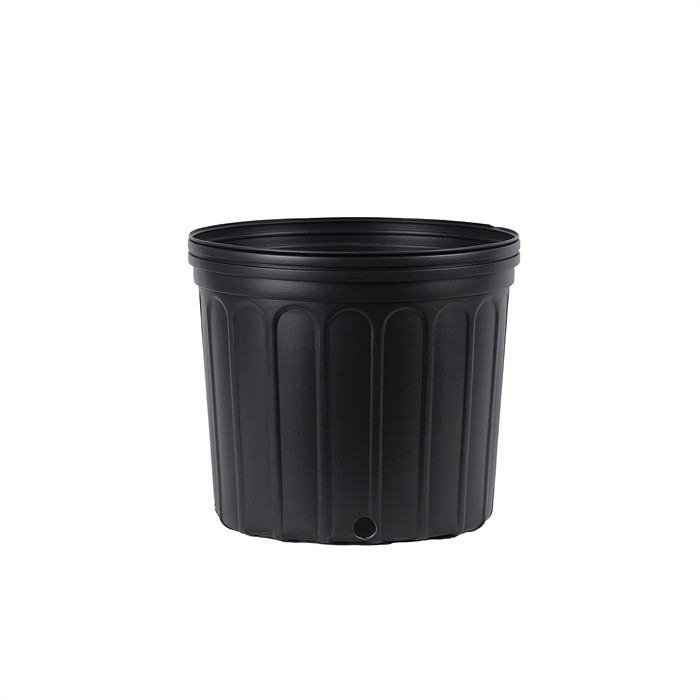
Matching the specific plant species to the appropriate container size is a foundational principle of horticulture. Placing a small seedling in an oversized pot frequently leads to root rot. The excess soil retains moisture much longer than the immature root system can absorb it. Cramming a large, aggressive plant into an undersized pot inevitably leads to root binding and severely stunted growth. Fortunately, this mid-sized volume supports a surprisingly diverse array of botanicals.
This container size is arguably the most efficient environment for cultivating nightshades, particularly peppers. Jalapeños, habaneros, and standard bell peppers feature root architectures that fit perfectly within this volume. This spatial harmony allows the plant to focus its metabolic energy on fruit production rather than endless root expansion.
For tomatoes, this size is exclusively ideal for determinate or bush varieties and specialized patio hybrids. While sprawling indeterminate tomatoes demand larger volumes, compact varieties will thrive and produce heavy yields in an 11-liter space. Leafy greens such as kale, Swiss chard, and spinach can be cultivated in high-density clusters within this footprint. This setup provides continuous cut-and-come-again harvests.
Perennial culinary herbs and small fruiting plants benefit immensely from the controlled, isolated environment of a 3 gallon nursery pot. A single vessel can comfortably house three to four bare-root strawberry crowns. This spacing ensures adequate airflow around the foliage to prevent destructive fungal diseases on the ripening fruit.
For culinary herbs, aggressive growers like mint, lemon balm, and rosemary are best kept strictly confined. The container prevents their invasive rhizomes from overtaking traditional garden beds. It still provides enough space to develop thick, woody bases and bushy foliage for a steady supply of fresh kitchen cuttings.
In commercial nursery operations, this container serves as a critical transitional incubator. Fruit tree saplings, delicate Japanese maples, and berry bushes are routinely up-potted into this size. They establish mature, robust root structures here before being sold for permanent landscape planting. For the home gardener, keeping a young fig tree or citrus sapling confined helps carefully regulate soil temperature and moisture during the plant's most vulnerable first two years of life.
When selecting containers, the underlying manufacturing process dictates the pot's durability, weight, and thermal properties. The two primary methodologies for producing plastic nursery pots are injection molding and blow molding. Injection-molded pots are created by forcing molten plastic into a rigid, highly pressurized mold. This results in a thick, stiff, and notably heavier container. While inherently durable, they are prone to shattering under freezing temperatures and are significantly more expensive to produce and ship.
Blow molding involves extruding a tube of heated High-Density Polyethylene plastic and inflating it within a mold cavity. This sophisticated process yields a container with thinner, highly flexible walls. For the vast majority of container gardening applications, a blow-molded pot is the superior, cost-effective choice.
The primary functional advantage is flexibility. When the time comes to transplant, a grower can gently squeeze and massage the pliable sides of a blow-molded pot to release the root ball smoothly. This entirely avoids structural damage to delicate feeder roots. High-quality blow-molded plastics are treated with advanced UV inhibitors. This crucial chemical addition prevents the polymer chains from degrading into brittle shards when subjected to relentless summer sunlight.
Feature | Blow-Molded 3 Gallon | Injection Molded 3 Gallon | Standard 5 Gallon |
|---|---|---|---|
Wall Flexibility | High pliable, easy root release | Rigid, requires tapping or cutting | Varies, often heavy and rigid |
Weight Empty | Ultra-lightweight | Medium-heavy | Heavy |
Substrate Cost | Optimized low cost | Optimized low cost | High requires 40% more soil |
Best Application | Greenhouses, patios, bulk nurseries | Permanent landscape displays | Large perennial trees, deep taproots |
A container is fundamentally only as effective as its drainage system. Plant roots require oxygen just as desperately as they require water. If gravity cannot pull water out the bottom of the pot, the soil quickly becomes anaerobic. This creates a breeding ground for root rot pathogens.
Quality blow-molded pots are specifically engineered with precise, multi-level drainage holes localized at the bottom ridges. This strategic placement ensures that excess water drains rapidly, flushing out accumulated fertilizer salts and actively pulling fresh oxygen down into the root zone.
Understanding the lifecycle and physical cues of plant roots is key to timing your transplants perfectly. Moving a plant at the wrong time can induce severe transplant shock, halting vegetative growth for weeks. Transitioning to a 3 gallon container ensures optimal development if timed correctly.
Seedlings or clones initially established in small propagation trays will eventually exhaust their spatial resources. You will know a plant is ready to be upgraded when you observe thick roots actively protruding from the bottom drainage holes. If the plant suddenly requires watering more than once a day under normal weather conditions, the root mass has likely displaced the water-holding substrate.
Slide the plant out gently. If you see a dense, circling mass of white roots, the plant is rootbound. It is time to transition. Score the outer roots lightly with a sterile blade before planting to encourage outward expansion into the new soil.
The micro-environment inside a container is entirely dependent on the grower's intervention. Because the plant cannot send taproots deep into the earth to forage for subterranean moisture and minerals, the soil composition and watering schedule must be meticulously curated.
Never use standard topsoil or garden dirt. Native field soil is simply too dense. When confined within a plastic wall, it compacts heavily. This crushes macropores, chokes off oxygen, and halts water drainage. Growers must utilize a high-quality, soilless potting mix formulated explicitly for containers.
An optimal blend for this volume typically consists of 40 to 50 percent peat moss or coco coir for essential moisture retention. To guarantee aeration, 30 percent perlite or pumice is non-negotiable. This prevents the organic matter from compacting over time. Integrating 20 to 30 percent aged compost or worm castings provides a biological foundation and a slow-release source of vital macronutrients. This lightweight matrix allows delicate root hairs to penetrate easily while maintaining the capillary action needed to distribute moisture evenly.
Moisture management is a highly dynamic process influenced by ambient temperature, humidity, and the plant's specific growth stage. A mid-sized container will naturally dry out faster than a raised garden bed, but it offers a far more forgiving moisture buffer than a tiny propagation pot. The most reliable, empirical method for determining watering needs is the tactile finger test. Insert your index finger two inches into the potting mix. If the medium feels completely dry at that depth, it is time to irrigate.
When watering, apply moisture slowly until it visibly begins to seep out of the bottom drainage holes. This practice ensures the entire soil column is saturated and encourages roots to grow downward rather than clustering at the surface. For commercial operations, installing a pressure-compensated drip irrigation system with 0.5 GPH emitters provides consistent, stress-free hydration.
For commercial operations or dedicated home horticulturists planning a large-scale layout, sourcing containers efficiently is a matter of both strict economics and quality control. Purchasing individual pots from a local retail garden center often incurs exorbitant markups.
When evaluating suppliers for bulk container purchases, prioritize manufacturers that utilize advanced blow-molding techniques and High-Density Polyethylene plastics. Ensure the product specifications explicitly guarantee UV-treatment. Untreated plastic will inevitably degrade and shatter after a single season of intense sun exposure. Carefully examine the drainage design. The best suppliers engineer their pots with multi-level or side-bottom drainage holes. This specific engineering guarantees that water escapes freely, even if the pot is sitting flush on a flat, non-porous concrete patio.
Choosing the correct container size is a foundational step that dictates the entire trajectory of your garden. Assess your seasonal gardening goals, calculate your available footprint, and invest in high-quality containers to establish a rock-solid foundation for a successful harvest. To ensure you are getting premium, UV-resistant, and aerodynamically designed containers for your next project, source your 3 gallon nursery pots directly from trusted industry manufacturers like HJ Pots.
While precise dimensions vary slightly depending on the specific manufacturer's mold, a standard three-gallon nursery pot often referred to in the industry as a trade gallon typically measures around 10 to 11 inches in top diameter and 9 to 10 inches in depth. It is important to note that horticultural trade gallons are generally smaller in volume than standard liquid U.S. gallons, equating to roughly 11.35 liters of actual volume.
Yes, but the success of the crop depends entirely on the variety selected. This volume is highly suitable for determinate bush-type tomatoes, dwarf patio varieties, and compact cherry tomatoes. These varieties are genetically programmed to grow to a specific height and stop, making their root systems manageable. Indeterminate vining tomatoes, which continue to grow and produce until frost, will quickly become root-bound and undernourished; they require a five-gallon or larger container for optimal physiological development and yield.
A standard three-gallon trade pot holds approximately 0.4 to 0.5 cubic feet, or roughly 11 to 14 dry quarts, of potting substrate. When purchasing bagged soil, it is standard practice to acquire slightly more volume than mathematically required. This accounts for the natural settling and compaction of the organic matter that occurs after the initial watering phases.
Absolutely. High-quality blow-molded containers are specifically engineered with durable polymers and UV inhibitors for multi-season commercial use. To prevent the transmission of soil-borne pathogens or overwintering pests to new crops, it is highly recommended to sanitize the pots between uses. After emptying the old substrate, vigorously wash the interior and exterior with a mild detergent and water. For rigorous sanitation, a brief soak in a 10 percent bleach solution followed by a thorough fresh-water rinse will render the containers perfectly safe for your next planting cycle.
In the horticultural industry, a trade gallon is a unit of volume used specifically for plant containers, and it is notably smaller than a standard U.S. liquid gallon. A standard liquid gallon equals 3.78 liters. A trade gallon equals approximately 0.71 liquid U.S. gallons, or about 2.68 liters. Therefore, a 3-gallon trade pot actually holds about 2.1 standard liquid gallons of soil volume.
The number of plants depends entirely on the mature size and root behavior of the species. For large fruiting plants like peppers or determinate tomatoes, plant exactly one per container to avoid nutrient competition. For smaller crops, you can comfortably plant three to four bare-root strawberries, or a dense cluster of leafy greens like spinach and leaf lettuce. Culinary herbs can also be planted in pairs, provided they share similar water and sunlight requirements.


