

close
Choose Your Site
Global
Social Media
Views: 0 Author: Site Editor Publish Time: 2026-10-20 Origin: Site


Did you know selecting the wrong container is the leading cause of ruined blueberry harvests? Growing these antioxidant-rich berries is an incredibly rewarding endeavor. However, the Vaccinium genus demands highly specific soil chemistry and root architecture. Traditional in-ground planting often fails due to poor native soils. For commercial farmers and urban gardeners alike, container cultivation presents the definitive, controllable solution.
Unfortunately, many growers experience stunted canopies or sudden plant death simply because they choose the wrong pot dimensions. Poorly designed containers lack adequate drainage. This quickly causes severe root rot, turning premium potting mix into a suffocating swamp. In this technical guide, you will learn how to select the exact hardware needed to mitigate these risks. Specifically, we will explain why upgrading to a specialized container design drastically improves space efficiency, root health, and overall fruit yield.
Root Systems Dictate Pot Shape: Blueberries possess shallow, wide-spreading fibrous roots. Wider containers prove significantly more effective than deep, narrow alternatives.
Square Pots Maximize Space: Geometric containers offer superior spatial optimization and structural stability. They are the pragmatic choice for commercial nurseries and compact home environments.
Drainage is Non-Negotiable: These plants require consistent moisture but deteriorate rapidly in standing water. Injection-molded containers with heavy-duty bottom and side drainage are absolute horticultural necessities.
The 25L Sweet Spot: A 25-liter volume represents the optimal long-term environment for mature blueberry bushes.
Soil Matters: Maintaining a strict acidic soil pH between 4.5 and 5.5 remains the biological foundation for successful cultivation.
To select an appropriate growing container, one must first understand the unique biological structure of the blueberry plant. Unlike many fruiting shrubs that adapt to their environment, blueberries have rigid root system requirements. These biological traits strictly dictate the structural parameters of their containers.
Unlike mature trees or standard garden vegetables that develop a deep central taproot, blueberries feature a highly fibrous, shallow root system. In a natural woodland soil environment, approximately 80 percent of a blueberry plant active root mass remains within the top 10 to 12 inches of the soil profile. Rather than driving downward, these delicate structures spread horizontally just beneath the surface. They aggressively forage for moisture and organic nutrients.
Furthermore, blueberries lack traditional root hairs. They rely entirely on a symbiotic relationship with ericoid mycorrhizal fungi to absorb water and minerals. This biological reality means the container must accommodate horizontal expansion rather than vertical depth. A container restricting lateral growth inevitably stunts the plant development, limiting both canopy size and berry production.
Blueberry roots are notoriously sensitive to anaerobic conditions. They simply cannot survive in environments starved of oxygen. While they require consistent moisture to thrive, any accumulation of stagnant water around the root zone quickly leads to suffocation and devastating Phytophthora root rot.
Therefore, the physical design of the container is the most critical purchasing decision a grower makes. A proper pot must facilitate rapid water exit while allowing atmospheric oxygen to penetrate the growing medium. Without engineered structural drainage, even the most carefully formulated acidic soil mix becomes waterlogged. This guarantees plant failure.
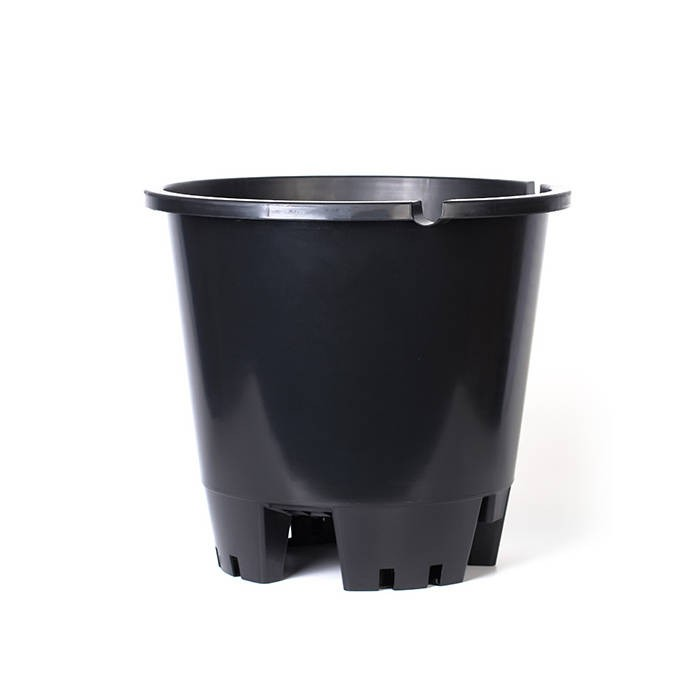
A common point of confusion among growers is the dimensional ratio of the container. When evaluating pots of the exact same total volume, the ratio of height to width significantly impacts long-term plant health.
Given the horizontal growth habit of blueberry roots, a wider pot directly aligns with the plant natural biological tendencies. Wide containers provide a significantly larger surface area for oxygen exchange. This is vital for the shallow root system and its associated beneficial fungi. When roots naturally spread outward, the plant establishes a stronger nutrient-uptake network. This translates directly to plumper, sweeter fruit.
In contrast, extremely tall, narrow pots present a significant physical problem known as the perched water table. In any closed container, the lowest layer of soil retains a zone of saturation after watering. In a tall pot, this saturated zone sits far below the shallow root system of the bush. As a result, the bottom half of the container becomes a complete waste of expensive potting soil. The roots never reach it, and it acts as a stagnant moisture trap limiting oxygen circulation. Conversely, a pot with a balanced, wider profile ensures the perched water table remains minimal. The entire volume of soil is utilized efficiently by the spreading root mass.
Global agricultural markets show a definitive shift in commercial berry production. Facing unpredictable climate patterns and soil-borne pathogens, modern agronomy is rapidly moving toward high-density, substrate-based container systems. This precision agriculture model relies entirely on maximizing yield per square meter. Consequently, container geometry has become a critical focal point for facility design. Empirical data indicates that square containers offer distinct operational advantages over traditional round pots.
Space efficiency directly correlates to profitability in commercial greenhouse operations. Traditional round pots placed side-by-side naturally create empty voids. Industry measurements indicate round pots waste approximately 20 percent of available floor or pallet space.
By transitioning to a purpose-built Square Blueberry Pot, growers achieve flush, grid-like placement. This tight alignment maximizes square footage. It allows for significantly higher plant density per acre without compromising the individual soil volume each plant receives.
Mature blueberry bushes easily become top-heavy when heavily laden with summer fruit. Round pots with tapered bottoms have a smaller footprint relative to their volume. They are highly susceptible to tipping over during high winds. Square containers feature a wider, flat, geometric base that distributes the center of gravity evenly. For home growers utilizing exposed balconies or rooftop gardens, this added wind resistance prevents physical damage to branches and protects the harvest.
From a logistical standpoint, square containers streamline daily operations. They interlock neatly, making them significantly easier to pack securely onto standard shipping pallets. Whether a commercial operator moves thousands of units via forklift or a home gardener rearranges a patio layout, the flat edges allow for secure handling and highly efficient spatial management.
The material composition of your container drastically affects thermal regulation, moisture retention, and long-term durability. Selecting the right material is essential for maintaining the specific micro-climate blueberry roots demand.
Material Type | Moisture Retention | Aeration | Durability | Suitability for Blueberries |
|---|---|---|---|---|
Injection-Molded Plastic | High | Moderate-High | Excellent | Optimal |
Fabric Grow Bags | Low | Very High | Low-Moderate | Sub-optimal |
Terracotta / Ceramic | Very Low | Low | High | Poor |
Heavy-duty, injection-molded plastic stands as the premier choice for blueberry cultivation. Unlike flimsy thermoformed plastics, injection-molded containers feature thick, rigid walls. They provide excellent thermal insulation against sudden temperature spikes. They retain moisture efficiently while allowing precise drainage through engineered holes. High-quality plastic is incredibly cost-effective and built to withstand harsh agricultural environments for years.
Fabric pots offer superior aeration and air-pruning capabilities. However, for blueberries specifically, this advantage quickly becomes a liability. Fabric bags expose the entire soil profile to ambient evaporation, causing the medium to dry out exceptionally fast. Because blueberries require consistent moisture, using fabric bags necessitates a highly rigorous daily watering schedule. Additionally, fabric lacks the structural rigidity required for safe commercial transport.
Traditional terracotta and unglazed ceramics are highly porous materials. They actively wick moisture away from the potting soil and evaporate it into the air. This leads to chronic drought stress for the sensitive blueberry plant. Moreover, terracotta is incredibly heavy and prone to shattering during freezing winter temperatures.
Not all plastic containers are manufactured equally. To ensure long-term viability and robust plant health, buyers must evaluate containers based on specific engineered structural features.
A single punched hole in the center of a pot is entirely insufficient. Commercial-grade containers must feature a multi-tiered drainage system. Look specifically for pots incorporating a heavy-duty bottom grid paired with elevated side drainage slits. This dual configuration ensures excess water escapes freely even if the pot sits on muddy or uneven ground. It completely eliminates the risk of waterlogging.
Blueberries require a minimum of six to eight hours of direct sunlight daily to produce high yields. Consequently, their containers are subjected to intense ultraviolet radiation year-round. Standard untreated plastics undergo rapid photodegradation, becoming brittle and cracking within a single summer. It is vital to select containers manufactured with UV inhibitors. This ensures the polymer matrix remains flexible and intact through years of harsh solar exposure.
In smooth round pots, growing roots eventually hit the curved plastic wall and begin to circle endlessly. This root-binding condition literally chokes the plant and severely limits nutrient uptake. The geometric architecture of a square container provides a distinct biological advantage. When roots reach the 90-degree corners, the shape naturally deflects them downward rather than allowing them to circle. This architectural feature promotes a healthier, structurally sound root mass.
Selecting the correct pot volume is a delicate balancing act. A pot that is too small restricts growth and requires constant watering. Conversely, a pot excessively large for a young plant holds too much unabsorbed moisture, increasing the risk of soil souring.
For young saplings, newly rooted cuttings, or first-year tissue culture plants, smaller containers ranging from 4 to 11 liters are appropriate. At this early stage, the limited root mass needs a manageable volume of soil that dries out at a predictable rate. This encourages young roots to actively expand outward in search of water.
As the bush matures into its prime fruit-bearing years, it requires a permanent home. Horticultural consensus indicates a volume of roughly 6.5 gallons is the optimal target. This is exactly why a specialized 25L Blueberry Pot serves as the industry standard for mature dwarf and semi-dwarf varieties. A 25-liter capacity provides ample width for shallow roots to establish a robust network. It supports the physical weight of a mature canopy and holds enough soil to buffer pH fluctuations without wasting expensive acidic potting mix.
Securing the proper container is only the first phase of establishing a successful cultivation system. Because container-grown plants depend entirely on the grower for environmental inputs, managing the micro-climate within the pot is critical.
Blueberries are calcifuges. They absolutely cannot tolerate alkaline soils. Replicating highly acidic woodland soil chemistry is the most critical factor for nutrient absorption.
The optimal soil pH ranges strictly between 4.5 and 5.5. If the pH rises above 5.5, the plant quickly develops iron chlorosis. Leaves turn sickly yellow while veins remain green, eventually leading to stunted growth and fruit drop. Standard commercial potting soils are typically pH-neutral and entirely unsuitable. To create the ideal acidic substrate, blend 50 percent sphagnum peat moss, 30 percent finely shredded pine bark, and 20 percent horticultural perlite. Use a calibrated digital pH meter to monitor the substrate every few months.
Because fibrous roots lack fine root hairs, blueberries are highly sensitive to both drought and waterlogging. The substrate must remain consistently moist, akin to a wrung-out sponge, but never saturated. During peak summer temperatures, a mature bush may require daily irrigation. For commercial operations, utilizing automated drip irrigation systems with pressure-compensating emitters is the most reliable method.
Extreme caution is required regarding fertilization. Blueberries are highly sensitive to nitrate-based nitrogen, which can be toxic. They require ammoniacal nitrogen. Select fertilizers specifically formulated for acid-loving plants utilizing ammonium sulfate. Fertilize in early spring just before bud break, and again in late spring during fruit set.
Thermal regulation is a primary challenge of container gardening. In a container, the root zone is fully exposed to freezing ambient air temperatures. This makes the plant significantly more vulnerable to winter damage.
For growers in colder climates, overwintering strategies are essential. Physical geometry provides a distinct operational advantage here. By utilizing square pots, growers can cluster their plants tightly together. The flush, flat sides eliminate the freezing air gaps that naturally occur when grouping round pots. This tight grid formation creates a collective thermal mass, significantly insulating the inner root zones. Adding a thick layer of straw mulch over the clustered pots further protects root systems during dormancy.
Not all blueberry cultivars are genetically predisposed to thrive in restricted spaces. Standard Northern Highbush varieties require massive root space. For container cultivation, dwarf and semi-dwarf varieties are highly recommended.
Blueberry Variety | Type Classification | Chill Hours Required | Mature Height | Container Suitability |
|---|---|---|---|---|
Top Hat | Dwarf / Half-high | 500 - 700 hours | 1.5 - 2 feet | Excellent; ideal for compact spaces. |
Sunshine Blue | Southern Highbush | 150 - 500 hours | 3 - 4 feet | Exceptional; highly tolerant of higher pH. |
Pink Icing | Northern Highbush | 500 - 600 hours | 3 - 4 feet | Great; known for ornamental foliage and robust yield. |
Jelly Bean | Dwarf Highbush | 200 - 400 hours | 1 - 2 feet | Excellent; highly productive in restricted spaces. |
Sourcing reliable, commercial-grade agricultural containers is a fundamental operational decision. The initial capital expenditure on high-quality pots directly impacts long-term profitability for commercial nurseries and ensures sustained plant health for residential gardeners. Substandard containers constructed from thin plastics rapidly degrade, leading to structural failure.
For growers seeking hardware engineered specifically to address the biological requirements of berry cultivation, HJ Pots stands out as a premier manufacturer. Their product line perfectly bridges the gap between commercial durability and horticultural functionality.
The standout solution for mature bushes is their 25L injection-molded nursery pots. Unlike cheap alternatives, this container is manufactured using an advanced injection-molding process. It features significantly thicker walls, superior load-bearing capacity, and exceptional resistance to environmental stress cracking.
From a horticultural perspective, the 25-liter volume provides ample horizontal space for fibrous root systems to expand. The heavy-duty bottom and side drainage configurations are meticulously designed to prevent waterlogging. For commercial operations, the square geometry translates directly to increased revenue per square foot, allowing nurseries to increase plant density by up to 20 percent. Growers looking to optimize their cultivation infrastructure should review the technical specifications of these commercial-grade square blueberry pots to upgrade their current systems.
Successful berry cultivation starts from the ground up. Selecting the proper container lays the foundation for healthy soil ecology and vigorous root development. By moving away from deep, narrow, or poorly draining pots, you immediately eliminate the most common causes of plant failure. Investing in a high-quality, UV-resistant square container saves valuable space and streamlines gardening logistics. It provides the perfect micro-climate to protect plants through harsh winters and blazing summers. Upgrade your nursery pots today, maintain that crucial acidic soil pH, and prepare yourself for seasons of bountiful harvests.
No, blueberries absolutely do not require deep pots. From a botanical standpoint, blueberry bushes possess a shallow, fibrous root system that naturally spreads horizontally near the soil surface. A container that is excessively deep simply holds stagnant, unused moisture at the bottom. This drastically increases the risk of anaerobic soil conditions and root rot. A wider, moderately deep container is far superior as it perfectly accommodates the natural lateral spread of the roots.
You should strictly plant only one blueberry bush per container. Blueberries are highly competitive for both water and specific soil nutrients. Planting multiple bushes in a single 25L container leads to severe resource competition. This results in stunted canopy growth, poor root development, and a drastic reduction in fruit yield. Dedicate one appropriately sized container to each individual bush.
Watering frequency depends entirely on ambient temperature and plant maturity. During mild spring weather, watering every two to three days is usually sufficient. However, during peak summer heat, a mature bush in a 25L pot will rapidly transpire moisture and may require daily irrigation. The goal is to keep the substrate consistently damp like a wrung-out sponge, never bone dry and never soaking wet. Always check the top two inches of the soil before watering.
Blueberries generally perform much better in heavy-duty plastic pots. While fabric pots offer excellent aeration, they allow moisture to evaporate from all sides rapidly. Because blueberries are highly susceptible to drought stress and require constant, even moisture, fabric pots demand an impractically rigorous watering schedule. Injection-molded plastic pots retain moisture efficiently while still providing adequate drainage through engineered bottom and side holes.
Yes, but it depends heavily on your specific USDA hardiness zone. While the upper canopy of a blueberry bush is highly cold-tolerant, the roots are much more susceptible to freezing when elevated above ground in a container. In milder climates, they can remain outdoors year-round. In harsh winter zones, you must take protective measures. Push your square pots tightly together to form a solid block, which insulates the inner root zones, and add a heavy layer of mulch over the top.
High-quality, injection-molded plastic pots are engineered for immense longevity and commercial reuse. Unlike thin, thermoformed plastics that become brittle and shatter after a single season in the sun, injection-molded containers are constructed from thick, high-density polymers treated with UV inhibitors. Under normal agricultural conditions, a premium injection-molded pot easily lasts for five to ten years without suffering structural degradation.
The ideal soil mix must be highly acidic, well-draining, and rich in organic matter. A proven, professional-grade recipe consists of 50 percent sphagnum peat moss, 30 percent pine bark mulch, and 20 percent horticultural perlite. The peat moss and pine bark naturally drive the soil pH down to the required 4.5 to 5.5 range. The perlite ensures excess water drains rapidly. Avoid using standard commercial potting soils or composts containing manure, as these are far too alkaline.


