

close
Choose Your Site
Global
Social Media
Views: 0 Author: Site Editor Publish Time: 2026-09-30 Origin: Site


Transforming an outdoor space rarely demands heavy machinery or massive budgets. Homeowners frequently step onto flat concrete patios unsure of how to introduce height and texture. Traditional in-ground beds require permanent structural commitment and high maintenance. Large outdoor plant pots offer a highly practical and visually striking alternative for spatial design.
Recent landscape architecture trends highlight a massive shift toward modular outdoor living rooms. Urbanization and unpredictable weather patterns drive this change. Designers now prioritize biophilic design elements that bridge indoor comfort with outdoor environments. Industry data shows a steep decline in permanent masonry beds. Instead, the market heavily favors flexible container gardening. This approach ensures climate resilience and seasonal adaptability. It proves especially vital in urban environments where native soil access remains restricted.
We will analyze the structural benefits of container landscaping. We will also evaluate material durability and specific horticultural advantages. Understanding these versatile vessels fundamentally upgrades exterior design strategies. You can effectively manage sweeping suburban lawns or compact urban balconies by applying these baseline principles.
Architectural Anchors: Large plant pots act as structural focal points. They instantly elevate courtyards and entryways by introducing vertical sightlines.
Material Science: Choosing the right material dictates aesthetic appeal and long-term longevity. Options range from heavy Corten steel to advanced lightweight Polypropylene.
Geometric Flexibility: Specific shapes offer distinct horticultural benefits. A broad top allows for multi-layered floral arrangements using professional landscape methods.
Resource Efficiency: Pairing oversized containers with drought-tolerant species creates an eco-friendly setup requiring minimal daily upkeep.
System Setup: Understanding fluid dynamics for drainage and void-filling techniques is essential for baseline root health.
Integrating substantial containers into your landscape architecture goes beyond basic aesthetics. These elements manipulate visual perception and solve complex spatial dilemmas. They offer a level of environmental control that traditional garden beds simply cannot match.
A focal point immediately draws the eye and anchors the surrounding space. Open outdoor areas often feel disjointed without a central visual anchor. Imagine a flat stone patio transformed by two massive textured pots flanking the entryway. The sheer mass and vertical height of the foliage interrupt flat sightlines. This forces the viewer to pause and engage with the environment.
Symmetry and scale remain critical during placement. Flanking a front door with identical containers establishes formal elegance. Conversely, an asymmetrical grouping of varying heights creates a relaxed organic atmosphere. The volume of these garden receptacles supports small ornamental trees. This effectively brings forest-level canopy layers directly to hardscaped environments.
Urban courtyards often suffer from an overabundance of concrete and brick. These highly functional surfaces can feel sterile. Breaking up expansive hardscapes with permanent planting beds requires destructive concrete removal. This process is expensive and risks altering critical drainage slopes.
Large containers offer a non-destructive solution. Designers use them to define distinct zones within an open patio. A linear arrangement of tall rectangular planters filled with dense bamboo acts as an instant privacy screen. Furthermore, the elevation brings the garden closer to eye level. This significantly enhances the sensory experience for seated guests.
Environmental mobility is a frequently overlooked engineering advantage. In-ground plants remain subjected to fixed local conditions. A plant will inevitably struggle if its fixed location receives excessive afternoon sun. Containers allow operators to chase optimal microclimates throughout changing seasons.
You can position a sun-loving hibiscus in the center of the patio during peak summer. You can then easily move it to a sheltered corner when autumn temperatures drop. Placing heavy-duty locking casters under oversized pots ensures your landscape remains dynamic. This mobility allows for effortless seasonal redesigns without uprooting delicate root systems.
Selecting the correct material requires balancing aesthetic preferences with environmental realities. A pot that looks beautiful in a showroom may fail miserably under local freeze-thaw cycles. Field engineers always evaluate UV exposure levels and structural weight limits before specifying containers.
Material Type | Weight Profile | Durability & Frost Resistance | Best Application Scenario |
|---|---|---|---|
Concrete & Cast Stone | Extremely Heavy | High structural integrity but porous. Can crack if water freezes inside micro-fissures. | Permanent public spaces or high-wind areas requiring massive stability. |
Corten Steel | Heavy | Exceptional. Forms a protective rust patina that prevents further corrosion. | Industrial or minimalist designs. Avoid placing on light paving due to rust runoff. |
Terracotta | Moderate | Poor frost resistance. Highly porous clay shatters easily during winter freeze-thaw cycles. | Hot dry climates. Ideal for succulents requiring rapid soil drying. |
Polypropylene / Resin | Lightweight | Outstanding. Resists impact, UV degradation, and extreme temperature fluctuations. | Balconies, modular patios, and residential decks where weight limits are a concern. |
Heavy-duty materials like Corten steel and cast concrete dominate modern minimalist designs. Corten steel develops a protective layer of rust. This creates a rich warm patina contrasting beautifully with vivid green structural plants. The rust forms a protective barrier making it incredibly durable. However, early rust runoff can permanently stain light-colored paving stones.
Concrete planters offer a sleek brutalist aesthetic. Their immense weight makes them a permanent structural commitment. This sheer mass provides unparalleled stability in high-wind zones. Concrete remains porous and leaches alkaline substances into the soil over time. You must monitor soil pH closely for acid-loving plants.
Advancements in polymer science have revolutionized container manufacturing. High-density plastics and Polypropylene offer the visual appeal of natural materials without the severe drawbacks of weight and fragility. Polypropylene delivers an exceptional strength-to-weight ratio and high impact resistance.
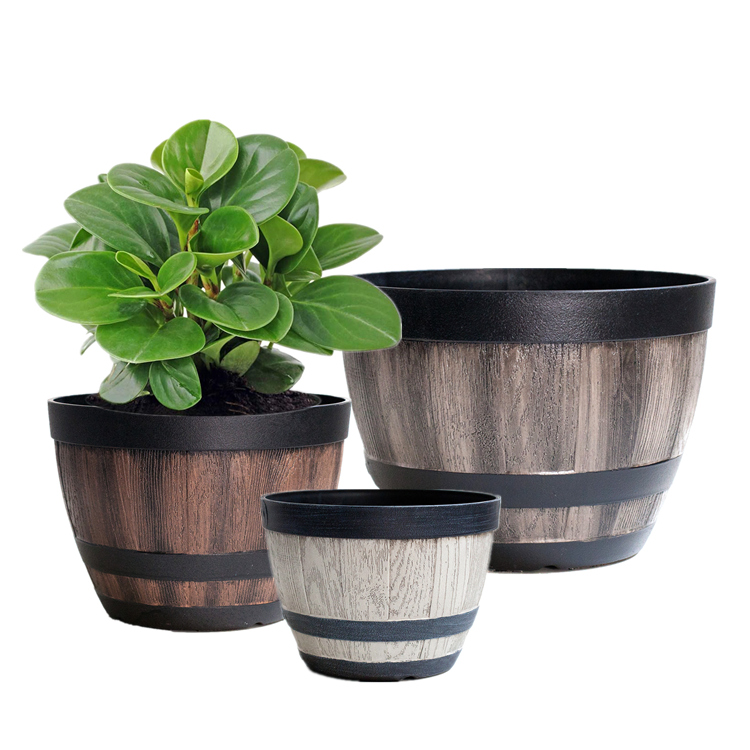
Modern injection molding allows Polypropylene to convincingly mimic natural textures. Homeowners seeking a farmhouse aesthetic often worry about rapid timber decay. Specifying a 9-inch PP wood-look wide opening planter solves this problem entirely. It delivers the visual warmth and grain texture of authentic wood while remaining highly portable. This makes it an excellent modular choice for complementing massive concrete anchor pots.
Overall container volume dictates maximum plant size. However, the specific geometry of the pot plays a critical role in horticultural health. Opting for a container with a broad expansive top surface provides measurable advantages over narrow-necked urns.
A plant root system requires a delicate balance of water and oxygen to survive. Gas exchange in container environments occurs primarily at the soil surface. A broader top maximizes the surface area exposed to the atmosphere. This structural advantage facilitates superior oxygen diffusion into the upper layers of the potting mix.
A wider surface area also accelerates the evaporation of excess moisture. Soggy topsoil breeds fungus gnats and promotes crown rot. Allowing the top inch of soil to dry out efficiently naturally mitigates these common ailments. A wide opening planter design inherently promotes a healthier aerobic root zone.
Specific container geometries provide essential planting real estate. This space allows you to execute the industry-standard Thriller, Filler, and Spiller container recipe. This method relies on combining three distinct growth habits to create a three-dimensional display.
A rustic wide opening planter for garden use provides the necessary horizontal room. You can plant a tall dramatic centerpiece. You then surround it with mid-height mounding plants. Finally, you edge the perimeter with trailing vines that cascade over the sides. Narrow pots force these elements to compete fiercely for nutrients resulting in stunted growth.
The versatility of large plant pots allows them to support diverse botanical requirements. These vessels adapt to nearly any environmental condition when paired with the correct plant species.
Large containers easily house heat-tolerant annuals and perennials for vibrant seasonal displays. Species such as Lantana and Salvia thrive in intense summer sun. You must account for increased evaporation rates during prolonged heatwaves. Integrating water-retaining polymer crystals into the soil matrix helps maintain adequate moisture levels.
Many property owners prefer a minimalist approach requiring minimal pruning. Large containers serve as perfect housings for hardy evergreens like Boxwood or Dwarf Alberta Spruce. Ornamental grasses provide year-round texture without the need for deadheading. A single well-maintained olive tree in a large pot serves as a sophisticated low-effort focal point.
Xeriscaping principles translate seamlessly to container environments. Selecting drought-tolerant species like Agave and Sedum significantly reduces water consumption. Succulents possess shallow root systems that spread horizontally. This makes a broad-rimmed container the optimal vessel for these eco-friendly arrangements. This strategy proves highly effective in regions facing strict municipal water restrictions.
The long-term success of any container garden relies entirely on the initial engineering setup. Proper preparation prevents soil compaction and nutrient depletion. This saves significant time and replacement costs.
Drainage is the single most critical factor in container management. Rainwater accumulates at the bottom of a sealed pot. This standing water displaces oxygen and suffocates the root system. Every outdoor container must feature unobstructed drainage holes. If you utilize a decorative pot lacking holes, employ it as a cachepot by placing a pre-drilled nursery liner inside.
Filling a massive planter entirely with dense potting soil creates unnecessary weight. Horticulturists regularly employ void fill techniques. You fill the lower third of the pot with lightweight inert materials like closed-cell foam blocks or upside-down nursery pots. You then place a layer of permeable landscape fabric over the void fill. This prevents soil particulate from washing down and clogging the drainage layer.
Never use standard ground dirt in containers. Native soil is far too dense. It rapidly compacts within a confined space and restricts root expansion. Always specify a high-quality soil-less potting matrix designed specifically for containers. These blends contain peat moss for moisture retention combined with perlite to ensure aggressive aeration.
Container gardens generally require less maintenance than traditional beds. However, they do demand targeted care to account for their isolated environment and exposed root systems.
Potted plants depend entirely on supplemental watering. Their roots cannot access deep groundwater reserves. Containers dry out rapidly when exposed to direct wind. Utilize a soil moisture probe rather than relying on visual surface checks. Installing a micro-drip irrigation system on a programmable timer ensures consistent hydration without daily manual labor.
Winterization protocols protect both the plants and the structural integrity of the containers in freezing climates. Soil in an above-ground pot freezes much faster than the earth. Wrap the exterior of the plant pots in thermal insulation blankets to protect perennial roots. Elevate the containers slightly using wooden blocks. This prevents the drainage holes from freezing shut against the patio surface.
Large plant pots effectively transform dull outdoor spaces into structured inviting sanctuaries. They act as instant architectural focal points adding verticality without the permanence of traditional landscaping. Specifying durable climate-appropriate materials ensures your investment survives harsh weather cycles. Incorporating thoughtfully designed vessels with broad openings guarantees excellent root health and enables multi-layered floral designs.
Transform your landscape today by selecting engineered climate-ready containers. When you need the perfect balance of lightweight durability and rustic aesthetics, consider the PP wood-look rustic wide opening planter from HJ Pots to anchor your next outdoor living room project.
Yes. Without drainage holes rainwater pools at the bottom of the pot and displaces necessary oxygen. This quickly leads to root asphyxiation and will inevitably kill your plants.
Corten steel, fiberglass, and high-quality Polypropylene are excellent for winter climates. Terracotta and unglazed ceramic are highly prone to structural failure when trapped moisture freezes and expands.
This shape is incredibly versatile. It provides the necessary surface area for mixed floral arrangements, shallow-rooted succulents, sprawling herb gardens, or dense displays of low-maintenance greenery.
Fill the bottom third of the large pot with lightweight inert materials like closed-cell foam blocks or empty plastic bottles. Add a layer of permeable landscape fabric before pouring in your engineered potting soil.
Absolutely. Drought-tolerant landscaping translates perfectly to container environments. Plants like lavender, sedum, and ornamental grasses thrive in pots and require minimal irrigation.
Avoid heavy topsoil. Use a lightweight soil-less potting mix containing a blend of peat moss or coco coir for moisture retention, mixed heavily with perlite or pumice to ensure rapid drainage and maximum aeration.
Place heavy materials like river rocks or brick pavers at the very bottom of the planter before adding the void fill or soil. Selecting a planter with a wider base rather than a tapered bottom also significantly lowers the center of gravity.


